Does Xanax Show Up on a Drug Test?

April 22, 2026

Does Xanax show up on a drug test? Yes — with caveats. Detection windows, panel types, false negatives, and when dependence signals a bigger issue.

Woman in cream cardigan at a sunlit kitchen table with a ceramic coffee mug, thoughtful expression, reflecting quietly

Xanax (alprazolam) shows up on benzodiazepine-inclusive drug tests — but not on a standard 5-panel. Detection windows, false negatives, and when a test result signals something bigger.

Key Takeaways

  • Xanax shows up on drug tests that include a benzodiazepine panel — most 10-panel tests do; the standard 5-panel does not.
  • Urine detection: up to 5–7 days (up to 6 weeks in chronic users). Blood ~24 hours. Saliva ~2.5 days. Hair up to 90 days.
  • Routine benzodiazepine immunoassays often miss alprazolam because α-hydroxyalprazolam cross-reacts poorly; GC-MS or LC-MS/MS confirms.
  • A valid prescription can convert a positive to a reported negative via the Medical Review Officer — disclose during the MRO interview.
  • Benzo dependence can develop in 2–4 weeks of daily use, and withdrawal can cause seizures — tapering requires medical supervision.

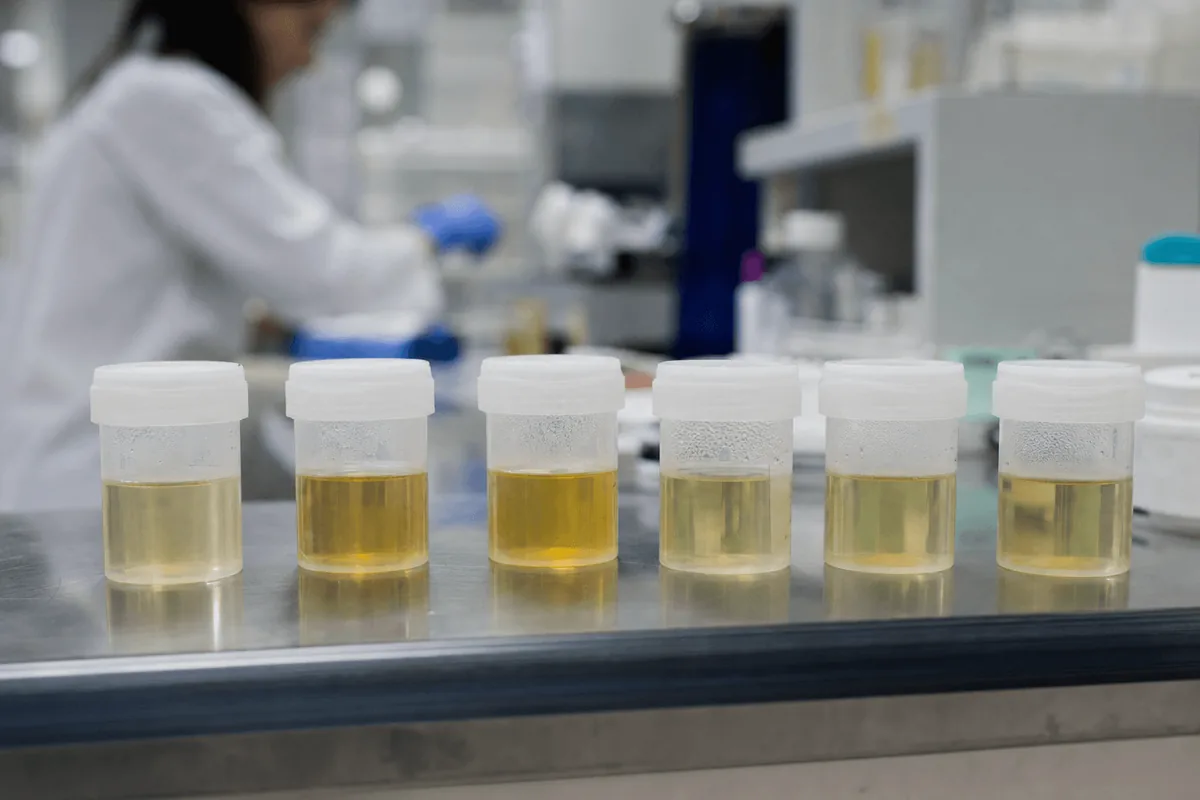
Xanax (alprazolam) is detectable on most drug tests that include a benzodiazepine panel. It will typically show in urine for up to 5–7 days after the last dose, in blood for about 24 hours, in saliva for roughly 2.5 days, and in hair for up to 90 days (Verstraete, 2004, Therapeutic Drug Monitoring; Mayo Clinic Laboratories, 2024). Standard 5-panel workplace tests usually skip benzodiazepines; most 10-panel and expanded panels include them. One nuance most explainers skip: because of how alprazolam is metabolized, routine immunoassay screens miss it more often than people realize — which makes "does Xanax show up" a more complicated question than a yes-or-no.

If a drug test result is what drove you here, the more important conversation is often the one underneath — how much Xanax, how often, and whether the body has started to depend on it. That is what this guide walks through.

Does Xanax show up on a drug test?

Yes — Xanax (alprazolam) shows up on any drug test that specifically screens for benzodiazepines, which includes most 10-panel tests, extended workplace panels, court-ordered and probation panels, and forensic testing. It does not show up on a standard 5-panel SAMHSA test, which only screens for amphetamines, cocaine, opiates, PCP, and THC (SAMHSA, 2023, Clinical Drug Testing in Primary Care, TAP 32). Whether Xanax appears on a given test depends entirely on which panel the ordering clinician or employer chose. Prescribed alprazolam remains detectable just like any other benzodiazepine — the laboratory does not distinguish licit from illicit use at the screening stage. That identification is the job of the Medical Review Officer (MRO), who reviews any positive and asks the donor for a valid prescription before reporting the result as a confirmed positive to the employer (HHS Mandatory Guidelines, 2023).

Which test panels include Xanax?

  • 5-panel (standard SAMHSA / DOT): No benzodiazepines. Xanax will not appear.
  • 10-panel: Typically includes benzodiazepines. Xanax can appear.
  • 12-panel and expanded forensic panels: Benzodiazepines included; alprazolam-specific confirmation is often available on request.
  • Hair test (ExpandedHair or equivalent): Benzodiazepine panel available, with detection windows up to 90 days.
  • Point-of-care urine cups sold at retail: Quality varies widely; many cheap cups do not detect alprazolam reliably even when marked "benzo."

How long does Xanax stay in urine, blood, saliva, and hair?

Detection windows for alprazolam vary by test type, dose, frequency of use, and individual metabolism. In single-dose studies of healthy adults, alprazolam had a mean plasma elimination half-life of about 11 hours, with α-hydroxyalprazolam (its main active metabolite) persisting slightly longer (Greenblatt and Wright, 1993, Clinical Pharmacokinetics). In urine, alprazolam and its metabolites are typically detectable for up to 5–7 days after a single therapeutic dose; for chronic, high-dose users, urinary detection can extend to 4–6 weeks as the drug accumulates in fatty tissue and washes out slowly (Verstraete, 2004). Blood testing has the shortest window — about 24 hours, and up to a few days in chronic users. Saliva tests detect alprazolam for roughly 2.5 days after last use. Hair testing has the longest window at approximately 90 days, reflecting incorporation into the hair shaft as it grows (Mayo Clinic Laboratories, 2024). These are typical ranges — outliers exist in both directions.

What affects how long Xanax stays in the body?

  • Dose and frequency — higher doses and daily use extend detection windows, sometimes dramatically.
  • Liver function and CYP3A4 activity — alprazolam is metabolized primarily by the CYP3A4 enzyme; inhibitors like erythromycin, ketoconazole, and grapefruit juice slow clearance substantially (FDA Xanax label, 2020).
  • Age — elimination half-life is roughly 50% longer in adults over 65 due to reduced hepatic clearance.
  • Kidney function — renal impairment prolongs elimination of metabolites.
  • Body fat percentage — alprazolam is lipophilic and stores in adipose tissue, which is why chronic users often test positive long after last use.
  • Concurrent medications — certain antidepressants, antifungals, and protease inhibitors meaningfully alter Xanax metabolism.

One practical note for chronic users: because alprazolam stores in fat, two people with identical dosing histories can clear the drug on very different timelines. A leaner person may test negative sooner than a heavier one after the exact same last dose. This is not a strategy — it's a reason to ignore internet advice that promises a fixed "out of your system in X days" number. Laboratory detection is probabilistic, not deterministic.

Why do standard drug tests sometimes miss Xanax?

Standard benzodiazepine immunoassays — the initial screening step used in most drug tests — are calibrated to detect oxazepam, a shared metabolite of older benzodiazepines like diazepam (Valium), chlordiazepoxide, and temazepam. Alprazolam's primary metabolite, α-hydroxyalprazolam, has poor cross-reactivity with these oxazepam-based antibodies, which means Xanax — particularly at therapeutic doses — can produce a false-negative result on a routine immunoassay screen (Fraser et al., 2001, Journal of Analytical Toxicology; West et al., 2012, Journal of Analytical Toxicology). This limitation is well documented in the toxicology literature and is a known headache in pain-management and forensic settings, where clinicians have mistakenly concluded patients weren't taking prescribed alprazolam because the screen came back negative. When alprazolam must be confirmed, laboratories use GC-MS (gas chromatography-mass spectrometry) or LC-MS/MS (liquid chromatography-tandem mass spectrometry), both of which identify alprazolam directly by molecular signature and are not fooled by immunoassay blind spots.

The practical takeaway: a negative benzodiazepine immunoassay does not rule out alprazolam use. A clinician, probation officer, or employer concerned specifically about Xanax should order alprazolam-specific mass-spectrometry confirmation rather than relying on the screening result alone. And for someone taking prescribed Xanax, a false-negative screen does not free them from the MRO disclosure obligation if the confirmation test is later run.

What does Xanax show up as on a drug test?

On an immunoassay screen, Xanax registers simply as "benzodiazepines" — the test does not differentiate alprazolam from diazepam, lorazepam, clonazepam, or other drugs in the class. Confirmation testing (GC-MS or LC-MS/MS) identifies the specific compound by mass-to-charge ratio and separates alprazolam from α-hydroxyalprazolam and other benzodiazepine metabolites in the same sample (Mayo Clinic Laboratories, 2024). For employment or probation testing conducted under federal standards, the Medical Review Officer reviews any confirmed positive and asks the donor to document a legitimate prescription. A verified, in-date alprazolam prescription is reported to the employer as negative — not as a positive-with-explanation (HHS Mandatory Guidelines, 2023, Federal Register). The MRO interview is the moment to disclose the prescription, not before and not after. Donors who refuse to speak with the MRO or who can't produce prescriber information within the MRO's timeframe forfeit the opportunity to explain a legitimate positive, and the result goes to the employer as a confirmed positive.

Can a prescription explain a positive Xanax result?

Yes — a valid, current prescription for alprazolam can cause a positive result to be reported as negative by the Medical Review Officer. Under federal workplace drug testing standards, the MRO is required to contact any donor with a non-negative result and interview them about possible legitimate explanations, including prescribed medications (HHS Mandatory Guidelines for Federal Workplace Drug Testing Programs, 2023). The donor provides the prescriber's contact information; the MRO verifies the prescription with the pharmacy or prescribing physician. If verified and clinically consistent with the positive result, the MRO reports the test as negative to the employer, and the employer does not learn which specific medication was taken. One exception: if the MRO believes the prescribed medication creates a safety risk in the donor's specific safety-sensitive role (for example, commercial driving or operating heavy machinery), the MRO may report a safety concern to the employer without disclosing the medication itself.

What does not qualify: a prescription issued in another country, a friend's or family member's prescription, an expired prescription, or a prescription from a provider who never examined the donor. The MRO will also look for clinical consistency — a tiny prescribed dose cannot explain a very high detected level of alprazolam.

What about probation, employment, and custody testing?

Probation, child-custody, and condition-of-employment drug screens almost always include benzodiazepines, and most now include alprazolam-specific confirmation rather than relying solely on immunoassay. Probation panels in particular are usually broader than workplace panels — many include benzodiazepines, buprenorphine, fentanyl, oxycodone, tramadol, synthetic cannabinoids, and kratom in addition to the standard five classes (SAMHSA, 2023). Courts and probation officers vary in how they handle prescribed Xanax: some require disclosure of the prescription at the start of supervision, others require a written waiver from the prescriber, and others restrict controlled-substance prescriptions entirely during supervised release. A person on probation should disclose any controlled-substance prescription to their probation officer at the earliest possible point — not wait for a positive result to force the conversation. Employment testing varies by industry: the federal Department of Transportation (DOT) testing currently does not include benzodiazepines, while many healthcare systems, law enforcement agencies, and safety-sensitive private employers do.

Child-custody disputes deserve special mention. Custody evaluators often order hair tests with 90-day lookback windows precisely because they catch the kind of intermittent use that urine testing misses. A prescribed Xanax regimen is defensible in custody proceedings when documented properly; undisclosed use is not.

If you're worried about testing positive, the question underneath matters more

Xanax dependence can develop in as little as 2–4 weeks of daily therapeutic use, and the FDA now carries a Boxed Warning on all benzodiazepines regarding abuse, misuse, addiction, physical dependence, and withdrawal reactions (FDA, 2020, Boxed Warning update on benzodiazepines). Someone asking how to beat a drug test is often also asking — quietly — whether the pattern of use has become a problem. Benzodiazepine withdrawal is clinically significant and can include seizures, delirium, protracted anxiety, and in rare cases psychosis; sudden discontinuation of high-dose or long-term alprazolam is not safe without medical supervision (SAMHSA TIP 45, 2015; NIDA, 2023). A medically supervised taper, typically over weeks to months depending on dose and duration of use, is the standard of care. At Clear Steps Recovery, our outpatient program provides supervised benzodiazepine tapering alongside dual-diagnosis care for the underlying anxiety, panic, or insomnia that often drove the Xanax use in the first place.

Alprazolam was the 38th most-prescribed medication in the United States in 2021 (ClinCalc DrugStats, 2023, drawing on IQVIA data), and benzodiazepines are involved in a rising share of opioid-overdose deaths because the two drug classes multiply each other's respiratory depression (NIDA, 2023). If Xanax use has expanded beyond what was originally prescribed — or if it was never prescribed at all and was obtained through friends, the street, or the internet — the risk profile is considerably higher than most people realize, and the path to stopping safely should include a clinician.

Signs dependence has developed

  • Needing a higher dose to get the same effect (tolerance)
  • Rebound anxiety, insomnia, or panic between doses
  • Running out of a prescription early or "doctor shopping"
  • Using Xanax in situations it wasn't prescribed for (to sleep, to come down from stimulants, to manage alcohol withdrawal)
  • Physical symptoms — tremor, sweating, racing heart — when a dose is missed or delayed
  • Failed attempts to cut back on your own

When to talk to someone

If any of those signs describe what's happening, it's worth a phone call. Most people who contact Clear Steps Recovery about benzodiazepine use started the same way — with a legitimate prescription for anxiety or panic that slowly outgrew itself. There is no judgment in that. What matters is that the path out exists, and the first step is not a commitment to treatment — it's a confidential conversation about what's actually going on. Our admissions team answers 24/7 at (603) 769-8981 in Londonderry, NH and (781) 765-0001 in Needham, MA. Dr. Richard Marasa, our Medical Director, has more than 46 years of clinical experience and 23+ years in personal recovery — the person on the other end of the line understands what it takes to get through this. For more on how alprazolam affects the body, see our companion guide on Xanax side effects.

If you are in immediate crisis, call or text 988 (Suicide & Crisis Lifeline) or the SAMHSA National Helpline at 1-800-662-HELP (4357). Both are free, confidential, and available 24/7.

A negative benzodiazepine screen does not rule out Xanax use — and a patient asking how to pass a test is often really asking whether dependence has set in.

Dr. Richard Marasa, Medical Director
2–4 weeks
Time for physical dependence on Xanax to develop with daily therapeutic use
FDA Boxed Warning update on benzodiazepines, 2020

Sources

  1. SAMHSAClinical Drug Testing in Primary Care, Technical Assistance Publication 32 (2023). samhsa.gov
  2. U.S. Department of Health and Human ServicesMandatory Guidelines for Federal Workplace Drug Testing Programs (Urine), Federal Register (2023). samhsa.gov
  3. FDADrug Safety Communication: FDA requires Boxed Warning updated to improve safe use of benzodiazepine drug class (September 2020). fda.gov
  4. FDAXanax (alprazolam) Prescribing Information (2020). accessdata.fda.gov
  5. Greenblatt DJ, Wright CEClinical pharmacokinetics of alprazolam. Therapeutic implications, Clinical Pharmacokinetics (1993). pubmed.ncbi.nlm.nih.gov
  6. Fraser AD, Bryan W, Isner AFUrinary screening for alprazolam and its major metabolites by the Abbott ADx and TDx analyzers, Journal of Analytical Toxicology (2001). pubmed.ncbi.nlm.nih.gov
  7. West R, Pesce A, West C, et al.Comparison of clonazepam compliance by measurement of urinary concentration by immunoassay and LC-MS/MS in pain management population, Journal of Analytical Toxicology (2012). pubmed.ncbi.nlm.nih.gov
  8. Verstraete AGDetection times of drugs of abuse in blood, urine, and oral fluid, Therapeutic Drug Monitoring (2004). pubmed.ncbi.nlm.nih.gov
  9. Mayo Clinic LaboratoriesBenzodiazepines Confirmation, Urine — Test ID BZOU, Clinical Laboratory Reference (2024). mayocliniclabs.com
  10. SAMHSADetoxification and Substance Abuse Treatment, Treatment Improvement Protocol (TIP) 45 (2015, reaffirmed). samhsa.gov
  11. NIDAPrescription CNS Depressants DrugFacts (2023). nida.nih.gov
  12. APADiagnostic and Statistical Manual of Mental Disorders, Fifth Edition Text Revision (DSM-5-TR) — Sedative, Hypnotic, or Anxiolytic Use Disorder (2022). psychiatry.org

Frequently Asked Questions

Does Xanax show up on a 5-panel drug test?

No. The standard 5-panel SAMHSA drug test only screens for amphetamines, cocaine, opiates, PCP, and THC. Benzodiazepines — including Xanax (alprazolam) — are not included. For Xanax to appear, the ordering party must request a 10-panel, 12-panel, or expanded benzodiazepine panel. Some employers and most probation agencies use extended panels specifically to catch prescription benzos, so "5-panel" should never be assumed without verification.

How long is Xanax detectable after one dose?

After a single therapeutic dose, Xanax (alprazolam) is typically detectable in urine for up to 2–4 days, in blood for about 24 hours, in saliva for roughly 2.5 days, and in hair for up to 90 days once it has grown in. In chronic users, urinary detection can extend to 4–6 weeks due to accumulation in fatty tissue. The elimination half-life in healthy adults is about 11 hours, but individual variation is wide (Greenblatt and Wright, Clinical Pharmacokinetics, 1993).

Can a prescription explain a positive Xanax test?

Yes. Under federal drug-testing standards, the Medical Review Officer (MRO) must contact anyone with a non-negative result and interview them about possible legitimate explanations, including prescribed medications. A valid, current Xanax prescription verified with the pharmacy or prescribing physician results in the test being reported to the employer as negative. The employer does not learn the specific medication. Expired prescriptions, prescriptions written for a family member, or out-of-country prescriptions do not qualify.

Why might a drug test miss Xanax?

Standard benzodiazepine immunoassays are calibrated to detect oxazepam, a metabolite of older benzos like diazepam. Xanax's main metabolite, α-hydroxyalprazolam, has poor cross-reactivity with those antibodies — so routine screens often return false-negative results even when alprazolam is present, especially at therapeutic doses. When alprazolam must be confirmed, laboratories use GC-MS or LC-MS/MS, which identify the specific compound directly (Fraser et al., Journal of Analytical Toxicology, 2001).

How does Xanax compare to Valium on a drug test?

Both Xanax (alprazolam) and Valium (diazepam) register as "benzodiazepines" on an immunoassay screen — the test does not distinguish between them. Confirmation testing via GC-MS or LC-MS/MS identifies the specific drug. Valium is actually easier for a routine immunoassay to detect because diazepam's metabolite (oxazepam) is exactly what the antibody is designed to recognize. Xanax is more prone to false-negative screening results because its metabolite cross-reacts poorly with that same antibody.

Will probation test for Xanax?

Almost always, yes. Probation drug panels are typically broader than employment panels and almost all include benzodiazepines, often with alprazolam-specific confirmation testing. Courts and probation officers vary in how they handle a valid Xanax prescription — some allow it with disclosure, some require a waiver from the prescriber, and some restrict controlled-substance prescriptions during supervision. Anyone on probation with a Xanax prescription should disclose it to their probation officer before any test is taken, not after a positive result.

Is it safe to stop taking Xanax on my own to pass a test?

No. Abruptly stopping Xanax after regular use is clinically risky. Benzodiazepine withdrawal can cause seizures, severe rebound anxiety, insomnia, and in some cases delirium — the FDA's 2020 Boxed Warning specifically flags these risks. Physical dependence can develop in as little as 2–4 weeks of daily use, even at prescribed doses. The safer path is a medically supervised taper, usually over weeks to months. If a drug test has surfaced the question of dependence, that is the signal to talk to a prescriber or a treatment program — not to stop cold.

How does Clear Steps Recovery treat Xanax dependence?

Clear Steps Recovery provides outpatient benzodiazepine treatment that combines a medically supervised taper with dual-diagnosis care for the underlying anxiety, insomnia, or trauma that often drives Xanax use. Our program operates in Londonderry, NH and Needham, MA, with both in-person and virtual options. Treatment is individualized — tapering schedules, therapy modalities (CBT, trauma-informed care), and non-benzodiazepine anxiety management are all tailored to the person. Call (603) 769-8981 (NH) or (781) 765-0001 (MA) for a confidential assessment.

Clear Steps Recovery provides general educational information about addiction and mental health. This content is not medical advice and should not substitute for professional diagnosis or treatment. Always consult a qualified healthcare provider for questions about your specific situation. If you are in crisis, call 988 (Suicide and Crisis Lifeline) or 911.

Learn About Clear Steps Recovery and How We Can Help You

Professional treatment is the best option if you or a loved one is struggling with addiction. The decision to seek treatment is only the first step, but it is the most important and is where clarity begins.

Once you reach out to Clear Steps Recovery, your path becomes clear, and you can get the help and support you need to break the cycle of addiction. Our serene woodland environment promotes physical, mental, emotional, and spiritual healing.

Call today or contact us online to get started.

The Path Is Clear – Take Your First Steps Today with Clear Steps Recovery

With our team and your desire to heal, we can improve your quality of life and functional abilities, so you can get back to living your best life.

or

Contact Us Today

Thank you! Your submission has been received!
Oops! Something went wrong while submitting the form.